🛒 Order Now — 50% OFF
🎉 Official Site — Get 50% OFF + Free Shipping on 3 & 6 Bottle Orders · Limited Stock
Home About Ingredient List Reviews ORDER NOW →
PurDentix  ›  Ingredients

PurDentix Ingredients — Complete Formula Breakdown

An in-depth look at every ingredient inside PurDentix — what each one is, how it works in your mouth, and what the science says about its role in oral health.

🔬 8 Active Ingredients 🌿 100% Natural 🇺🇸 GMP-Certified USA Facility Non-GMO · Gluten-Free · Vegetarian

Why Ingredients Matter More Than the Label

Most oral health products list impressive-sounding ingredients without explaining why they're there or what dosage actually produces results. PurDentix takes a different approach — every ingredient in the formula serves a specific, clinically studied purpose within the oral microbiome ecosystem.

The core insight behind PurDentix is that dental problems — bad breath, gum disease, cavities, sensitivity, plaque — don't originate at the surface of your teeth. They originate in the microbial environment of your mouth. When harmful bacteria outnumber beneficial ones, your oral health deteriorates regardless of how much you brush. PurDentix addresses this imbalance directly through a synergistic blend of probiotics, prebiotics, minerals, and natural compounds.

Below, we break down all 8 active ingredients in detail: what each one is, how it functions inside the mouth, what the research says, and exactly why it belongs in a dental supplement.

All PurDentix Ingredients at a Glance

# Ingredient Type Primary Benefit
1 Bifidobacterium Lactis Bl-04 Probiotic Restores beneficial bacteria; reduces cavity risk and oral infections
2 Lactobacillus Reuteri Probiotic Reduces plaque, gum inflammation, and pathogenic bacteria
3 Tricalcium Phosphate Mineral Remineralizes enamel; protects against decay and sensitivity
4 Inulin Prebiotic Feeds probiotic bacteria; reduces periodontal inflammation
5 Malic Acid Natural Acid Balances oral pH; removes surface stains naturally
6 Zinc Mineral Antibacterial; reduces plaque buildup and halitosis
7 Xylitol Natural Sweetener Inhibits Streptococcus mutans; boosts saliva for self-cleaning
8 Vitamin C Antioxidant Strengthens gum connective tissue; stops bleeding and promotes healing
1
Bifidobacterium Lactis Bl-04
Also known as: B. lactis Bl-04, Bifidobacterium animalis subsp. lactis Bl-04
Probiotic Oral Microbiome Support
Category
Probiotic Bacteria
Primary Target
Oral Microbiome
Key Action
Crowding Out Pathogens

Bifidobacterium Lactis Bl-04 is one of the most extensively studied probiotic strains in commercial use, with a particularly strong body of research supporting its role in both gut and oral health. In the context of dental supplementation, Bl-04 is chosen for its documented ability to colonize mucosal surfaces — including those inside the mouth — and establish a protective presence against harmful microorganisms.

What it does in your mouth

The oral cavity harbors over 700 species of bacteria. In a healthy mouth, beneficial strains keep pathogenic ones in check. But modern diets high in refined sugar, antibiotic use, poor hydration, and stress all disrupt this balance — allowing harmful bacteria like Streptococcus mutans and Porphyromonas gingivalis to proliferate. These are the organisms directly responsible for cavities, gum disease, and chronic bad breath.

Bifidobacterium Lactis Bl-04 works through a mechanism called competitive exclusion — it occupies the attachment sites on tooth and gum surfaces that harmful bacteria would otherwise colonize, physically blocking them from taking hold. It also produces short-chain fatty acids and other metabolites that lower local pH in ways that suppress pathogen growth without harming host tissue.

Research note: Multiple clinical studies have examined B. lactis strains for their effect on oral bacterial populations. Research published in dental microbiology literature has shown that regular supplementation with Bifidobacterium strains correlates with measurable reductions in counts of S. mutans and Lactobacillus cariogenic strains — key drivers of tooth decay.

Immune defense in the oral cavity

Beyond competitive exclusion, Bl-04 has been shown to modulate local immune responses. The oral mucosa contains significant immune tissue, and the probiotic interaction with mucosal immune cells can help prime defense responses against oral pathogens without triggering unnecessary inflammation. This dual role — antimicrobial and immunomodulatory — makes it particularly valuable in a formula targeting both decay prevention and gum health.

Why it's delivered as a lozenge

The delivery format matters significantly for oral probiotics. Swallowed capsules pass through the stomach where acid destroys most viable bacteria before they reach the mouth. PurDentix delivers Bl-04 as a slow-dissolving lozenge, allowing direct colonization of oral surfaces at therapeutic concentrations — the approach supported by probiotic oral health research.

  • Establishes a protective probiotic colony in the oral cavity
  • Reduces populations of cavity-causing bacteria like S. mutans
  • Supports immune defense in gum and mucosal tissue
  • Creates an unfavorable environment for oral pathogen growth
  • Works synergistically with Lactobacillus Reuteri for comprehensive coverage
2
Lactobacillus Reuteri
Also known as: L. reuteri, Limosilactobacillus reuteri
Probiotic Anti-Inflammatory
Category
Probiotic Bacteria
Primary Target
Gums & Plaque
Key Action
Reduces Inflammation

Lactobacillus Reuteri is one of the few probiotic strains that naturally inhabits the human oral cavity, making it uniquely suited to survive and thrive in the mouth. It is among the most researched probiotics specifically for periodontal (gum) health, with multiple human clinical trials demonstrating its ability to reduce the markers of gum disease.

Reuterin — a natural antimicrobial compound

What makes L. reuteri particularly powerful is that it produces a compound called reuterin (3-hydroxypropionaldehyde), a broad-spectrum antimicrobial substance that inhibits the growth of gram-negative bacteria — the class of bacteria most strongly associated with periodontal disease and chronic bad breath. This targeted antimicrobial action reduces pathogen load without disrupting beneficial microbial communities the way antiseptic mouthwashes do.

Key distinction: Unlike antibacterial mouthwashes that non-selectively kill both harmful and beneficial oral bacteria (often worsening long-term microbiome balance), L. reuteri produces targeted antimicrobial metabolites that suppress pathogens while supporting a healthy bacterial ecosystem.

Clinical evidence for gum health

Human clinical trials have specifically examined L. reuteri lozenges for periodontal disease outcomes. Studies have found significant reductions in gingival bleeding index, probing pocket depth, and inflammatory cytokine levels in subjects using L. reuteri supplementation alongside standard periodontal care, compared to placebo groups. These are objective clinical measures — not subjective reports — documenting real tissue-level improvements.

Research note: A randomized, double-blind, placebo-controlled trial published in the Journal of Clinical Periodontology found that L. reuteri lozenge supplementation significantly reduced both gingivitis scores and pathogenic bacterial counts in subjects with chronic periodontitis after 12 weeks of use.

Plaque disruption and biofilm prevention

Plaque forms when oral bacteria produce sticky polysaccharide biofilms that adhere to enamel surfaces. L. reuteri interferes with the initial adhesion phase of biofilm formation by competing for the same surface attachment sites used by plaque-forming organisms. Regular supplementation reduces both the rate of plaque accumulation and the thickness of established biofilm.

  • Produces reuterin — a natural, targeted antimicrobial against oral pathogens
  • Clinically shown to reduce gum bleeding and periodontal inflammation
  • Disrupts plaque biofilm formation and adhesion
  • Reduces counts of gram-negative bacteria linked to gum disease
  • Suppresses volatile sulfur compounds (VSCs) responsible for bad breath
  • Compatible with existing beneficial oral bacteria

PurDentix combines all 8 ingredients in one daily lozenge

Order today from the official site — 50% off + free shipping on 3 & 6 bottle orders

🛒 Get PurDentix Now
3
Tricalcium Phosphate
Also known as: TCP, Ca₃(PO₄)₂, Calcium Phosphate Tribasic
Mineral Enamel Support
Category
Calcium Mineral
Primary Target
Tooth Enamel
Key Action
Remineralization

Tricalcium Phosphate (TCP) is a calcium-phosphate mineral compound that mirrors the natural mineral composition of tooth enamel and dentin. Enamel is the hardest substance the human body produces, but it is not living tissue — it cannot repair itself through biological processes. Once eroded by acid, enamel can only be restored through a process called remineralization, in which calcium and phosphate ions from saliva and topical sources are incorporated back into the crystalline enamel lattice.

Why enamel erosion is so common

Modern diets are acidic. Soft drinks, fruit juices, coffee, fermented foods, and even natural fruit acids create an oral environment with pH levels that actively dissolve enamel minerals. Acid-producing bacteria in the mouth add to this burden. Even without obvious symptoms, most adults experience ongoing low-grade enamel erosion throughout their lives — leading gradually to increased sensitivity, yellowing, and cavity susceptibility.

The remineralization window: After an acidic challenge, the mouth enters a demineralization phase (pH below 5.5). Saliva naturally buffers this back to neutral over about 30–60 minutes, but during this window — and long after — topical calcium and phosphate ions can accelerate enamel mineral redeposition. TCP delivered via a slowly dissolving lozenge is ideally positioned to flood this window with remineralizing minerals.

TCP vs. fluoride — complementary mechanisms

While fluoride has long been the standard tool for enamel remineralization, TCP works through a distinct and complementary pathway. TCP delivers the actual calcium and phosphate building blocks that enamel is made of, directly replenishing what acid erosion removes. This makes it particularly effective in a supplement format where direct mineral delivery to enamel surfaces is possible throughout dissolution.

Sensitivity reduction

Tooth sensitivity — the sharp pain triggered by hot, cold, sweet, or acidic stimuli — typically results from exposed dentin tubules beneath thinned enamel. As TCP supports enamel remineralization and increases mineral density in the outer enamel layer, these tubules become partially occluded over time, reducing the fluid movement that triggers sensitivity pain signals.

  • Directly replenishes calcium and phosphate ions lost to acid erosion
  • Supports remineralization of softened or demineralized enamel
  • Reduces tooth sensitivity by increasing enamel mineral density
  • Creates a mineral-rich oral environment that discourages further decay
  • Works synergistically with saliva's natural buffering capacity
4
Inulin (Prebiotic Fiber)
Also known as: Chicory inulin, fructooligosaccharides (FOS), oligofructose
Prebiotic Microbiome Support
Category
Prebiotic Fiber
Primary Target
Probiotic Bacteria
Key Action
Feeds Beneficial Flora

Inulin is a naturally occurring prebiotic dietary fiber found in plants like chicory root, garlic, onion, and leeks. In the context of oral health supplementation, inulin serves a foundational supporting role: it acts as a selective food source for the probiotic strains in the formula, dramatically extending their activity and survival in the oral environment.

The prebiotic principle

Probiotics (beneficial bacteria) and prebiotics (the fibers that feed them) work together as a system. Introducing probiotic strains alone is effective, but providing their preferred fuel source alongside them — inside the same lozenge — means the bacteria have immediate access to nutrients upon colonization, allowing them to establish and reproduce more quickly and persist in the oral cavity for longer periods between doses.

Prebiotic selectivity: What makes inulin valuable as a prebiotic (rather than just a generic fiber) is its selective fermentability. Human digestive enzymes cannot break down inulin — meaning it passes to the large intestine intact. But oral and gut-dwelling beneficial bacteria can ferment it, selectively feeding Bifidobacterium and Lactobacillus strains while leaving pathogenic organisms unable to use it as a fuel source.

Periodontal inflammation reduction

Research has specifically examined prebiotic inulin for periodontal outcomes. Studies suggest that inulin supplementation can reduce markers of gingival inflammation, partly through the microbial community shifts it promotes (more beneficial bacteria, fewer pathogens) and partly through direct anti-inflammatory effects on gingival tissue. This makes inulin more than just a probiotic enhancer — it contributes directly to gum health outcomes.

  • Selectively feeds Bifidobacterium and Lactobacillus probiotic strains
  • Extends probiotic survival and colonization in the oral environment
  • Reduces periodontal inflammation markers in clinical research
  • Amplifies the effectiveness of both probiotic strains in the formula
  • Supports a stable, beneficial oral microbial community over time
5
Malic Acid
Also known as: L-malic acid, (S)-hydroxybutanedioic acid, apple acid
Natural Organic Acid pH Regulator
Source
Apples & Fruits
Primary Target
pH & Stain Removal
Key Action
Mild Chelation

Malic acid is a naturally occurring dicarboxylic acid found abundantly in apples and other fruits. It's responsible for the tart flavor in fresh apples and has been used in oral care formulations for decades — most notably as a mild enamel-friendly whitening agent and saliva stimulant. In PurDentix, it serves two distinct functions: surface stain removal and oral pH modulation.

Natural tooth whitening mechanism

Tooth discoloration from coffee, tea, red wine, and food pigments occurs when chromogenic (color-bearing) compounds bind to the protein pellicle — a thin film that naturally coats enamel surfaces. Malic acid acts as a gentle chelating agent that disrupts the bonds holding these pigment molecules to the pellicle, effectively lifting surface stains without the abrasion or peroxide chemistry used in conventional whitening products.

The result is a progressive, enamel-safe brightening effect that develops over weeks of consistent use — not the sharp sensitivity that often accompanies peroxide-based whitening treatments.

Enamel-safe whitening: Unlike abrasive whitening toothpastes (which physically scratch enamel to remove stains) or peroxide strips (which bleach enamel chemically and can cause sensitivity), malic acid's chelation mechanism is gentle on enamel structure. It removes the stain layer rather than altering the enamel itself.

Oral pH balance and bacterial inhibition

The mouth's pH is a critical variable in dental health. Harmful bacteria — particularly Streptococcus mutans — thrive in acidic conditions (pH below 5.5) and produce lactic acid as a metabolic byproduct, which further acidifies the environment and accelerates enamel dissolution. Malic acid, when metabolized in the oral environment, helps buffer toward a neutral pH range that suppresses acid-loving pathogens while being compatible with beneficial probiotic strains.

Saliva stimulation

The mild sour taste of malic acid triggers salivary gland stimulation, increasing saliva flow during the lozenge's dissolution period. Saliva is the mouth's primary natural defense mechanism — it buffers acids, remineralizes enamel, clears food particles, and contains antimicrobial proteins. Stimulating its production at key times adds a meaningful passive benefit to the formula.

  • Gently removes surface stains via chelation — without abrasion or peroxide
  • Buffers oral pH to suppress acid-loving pathogenic bacteria
  • Stimulates saliva production for enhanced natural oral defense
  • Enhances the natural brightness of teeth over consistent use
  • Enamel-safe — does not erode or scratch tooth structure at supplemental doses
6
Zinc
Also known as: Zinc citrate, zinc gluconate, zinc acetate (common oral care forms)
Mineral Antibacterial
Category
Essential Mineral
Primary Target
Bacteria & Plaque
Key Action
Antimicrobial

Zinc is one of the most extensively used minerals in oral care and has been included in toothpastes, mouthwashes, and dental treatments for over a century. Its role in PurDentix is both well-established and multifaceted: zinc simultaneously targets bacteria, plaque, and the volatile sulfur compounds (VSCs) responsible for bad breath — making it one of the most broadly useful single ingredients in the formula.

Mechanism: how zinc fights oral bacteria

Zinc ions (Zn²⁺) carry a positive charge that allows them to penetrate bacterial cell membranes and interfere with key metabolic enzymes. This disrupts bacterial energy production, cell wall synthesis, and reproductive processes. Importantly, zinc's antibacterial effect is more targeted than broad-spectrum antiseptics — it is particularly effective against gram-negative anaerobes (the bacteria most associated with gum disease and bad breath) while being better tolerated by commensal oral flora at supplemental concentrations.

Research note: Zinc's effectiveness in oral care is among the most replicated findings in dental science. Studies consistently show that zinc-containing oral products significantly reduce plaque index scores, gingival inflammation markers, and volatile sulfur compound levels compared to zinc-free controls. Zinc is included in the WHO's list of essential medicines in part due to its immune and antimicrobial properties.

Halitosis control: targeting VSCs at the source

Chronic bad breath (halitosis) is not primarily a hygiene problem — it is a microbial one. Gram-negative anaerobic bacteria metabolize sulfur-containing amino acids (from food and saliva proteins) and excrete volatile sulfur compounds: hydrogen sulfide (H₂S), methyl mercaptan (CH₃SH), and dimethyl sulfide — the chemical sources of malodor. Zinc ions bind directly to these sulfur compounds through a thiol-metal interaction, neutralizing them chemically before they volatilize into the breath. This is the same mechanism used by high-end clinical breath treatments.

Immune support in oral tissue

Zinc is essential for normal immune cell function throughout the body. In the oral cavity specifically, adequate zinc status supports the activity of neutrophils and macrophages in the gingival tissue — immune cells responsible for clearing bacterial infections in the gums. Zinc deficiency is associated with increased gum disease severity, and supplemental zinc has been shown to support faster healing of oral lesions and ulcers.

  • Directly inhibits key oral pathogens through enzymatic disruption
  • Chemically neutralizes volatile sulfur compounds (VSCs) — the source of bad breath
  • Reduces plaque index scores in clinical oral care research
  • Supports immune defense in gum and periodontal tissue
  • Promotes healing of inflamed or lesioned oral tissue
  • Inhibits the mineralization of dental calculus (tartar)
7
Xylitol
Also known as: Wood sugar, birch sugar, E967, pentanepentol
Natural Sugar Alcohol Cavity Prevention
Source
Birch & Corn
Primary Target
S. mutans Bacteria
Key Action
Starves Cavity Bacteria

Xylitol is a naturally occurring sugar alcohol found in many fibrous fruits and vegetables and commercially extracted from birch wood and corn cobs. It has one of the strongest evidence bases in oral health supplementation for cavity prevention — the result of decades of clinical research, including large-scale population studies in Finland that first identified its anti-cariogenic (anti-cavity) properties.

The xylitol-bacteria interaction: a molecular trap

Streptococcus mutans — the primary bacterium responsible for tooth decay — is remarkably good at metabolizing sugars into lactic acid. However, xylitol exploits a critical flaw in this process. S. mutans takes up xylitol as if it were glucose (it looks similar at the molecular level), but it cannot metabolize it. Instead, xylitol-5-phosphate accumulates inside the bacterium, creating a futile cycle that wastes the cell's energy and ultimately starves it. With repeated xylitol exposure, mutans populations decline significantly — even permanently altering the composition of the oral microbiome toward less cariogenic communities.

Long-term microbiome shift: Unlike antiseptics that kill bacteria temporarily, regular xylitol use drives a lasting change in which bacterial strains dominate the oral environment. Studies from the Finnish Xylitol Studies and subsequent replications found that children of mothers who regularly consumed xylitol transmitted fewer S. mutans bacteria to their children — suggesting effects that persist through behavioral changes in the microbiome.

Saliva stimulation and remineralization support

Xylitol is mildly sweet — about the same sweetness as table sugar — and this taste stimulates salivary gland secretion. Increased saliva flow has multiple benefits: it buffers oral acids, mechanically clears food debris, and crucially, delivers calcium and phosphate ions to enamel surfaces where they contribute to remineralization. This creates a supportive synergy with Tricalcium Phosphate elsewhere in the PurDentix formula.

Plaque quality alteration

Beyond reducing bacterial counts, xylitol changes the nature of plaque that does form. Bacteria that survive in a xylitol-rich environment produce plaque with a looser, less adherent structure — one that is more easily disrupted by brushing and less effective at harboring acid-producing organisms. This plaque quality shift represents a meaningful secondary benefit beyond raw bacterial suppression.

  • Creates a molecular trap that starves and reduces S. mutans populations
  • Among the most evidence-backed cavity prevention strategies in dental research
  • Stimulates saliva production for enhanced enamel remineralization
  • Produces looser, less cariogenic plaque structure in remaining biofilm
  • Non-fermentable by oral bacteria — cannot be converted to enamel-eroding acid
  • Drives lasting shifts in oral microbiome composition with regular use
8
Vitamin C (Ascorbic Acid)
Also known as: L-ascorbic acid, ascorbate, E300
Antioxidant Vitamin Gum Repair
Category
Water-Soluble Vitamin
Primary Target
Gum Connective Tissue
Key Action
Collagen Synthesis

Vitamin C (ascorbic acid) is an essential water-soluble vitamin and one of the most important nutrients for gum health. The connection between Vitamin C deficiency and gum disease has been understood for centuries — scurvy, the disease of severe Vitamin C deficiency, manifests primarily as bleeding gums, loosening teeth, and deterioration of connective tissue. This relationship reflects Vitamin C's irreplaceable role in the synthesis of collagen — the structural protein that makes up 60–70% of gum tissue.

Collagen synthesis and gum structure

Collagen is the scaffold that holds gum tissue together, attaches gums to teeth, and maintains the structural integrity of the periodontal ligament (the connective tissue that anchors teeth in the jaw). Vitamin C is an essential cofactor for two enzymes — prolyl hydroxylase and lysyl hydroxylase — that convert procollagen into mature, structurally stable collagen fibers. Without adequate Vitamin C, collagen synthesis is impaired and existing collagen degrades faster than it can be replaced, leading to weakened, bleeding gums.

Research note: Epidemiological studies have consistently found an inverse relationship between dietary Vitamin C intake and periodontal disease severity. A large-scale analysis of NHANES (National Health and Nutrition Examination Survey) data found that adults with lower serum Vitamin C levels had significantly higher rates of periodontitis, even after controlling for confounders including dental hygiene practices. Supplemental Vitamin C has been shown in multiple trials to reduce gingival bleeding indices in individuals with active periodontal inflammation.

Antioxidant defense in gum tissue

Gum inflammation produces reactive oxygen species (ROS) — unstable free radical molecules that damage cells and perpetuate inflammatory cycles. Vitamin C is the primary water-soluble antioxidant in gingival crevicular fluid (the fluid found in the space between gums and teeth), where it neutralizes these ROS before they can cause additional tissue damage. By reducing oxidative stress in inflamed gum tissue, Vitamin C helps break the inflammatory cycle that drives progressive gum disease.

Wound healing and tissue repair

For individuals with active gum inflammation or early periodontal disease, Vitamin C's role extends beyond prevention into active tissue repair. Adequate Vitamin C accelerates the healing of inflamed or damaged gingival tissue, reduces the time for lesions and irritations to resolve, and supports the regeneration of healthy gum architecture. This makes it particularly valuable in the PurDentix formula for users starting supplementation with existing gum issues.

  • Essential cofactor for collagen synthesis — the structural protein of gum tissue
  • Clinically associated with reduced gingival bleeding and periodontal disease severity
  • Primary antioxidant in gingival crevicular fluid — neutralizes inflammatory free radicals
  • Accelerates healing of damaged or inflamed gum tissue
  • Strengthens blood vessel walls in gum tissue to reduce easy bleeding
  • Supports immune cell function in the periodontal environment

All 8 ingredients. One daily lozenge. Official site pricing.

60-day money-back guarantee — try PurDentix completely risk-free

🛒 Order PurDentix Now
Limited Time Offer

Experience Every Ingredient in PurDentix

Order from the official site today — 50% off, free shipping on 3 & 6 bottle orders, and a full 60-day money-back guarantee.

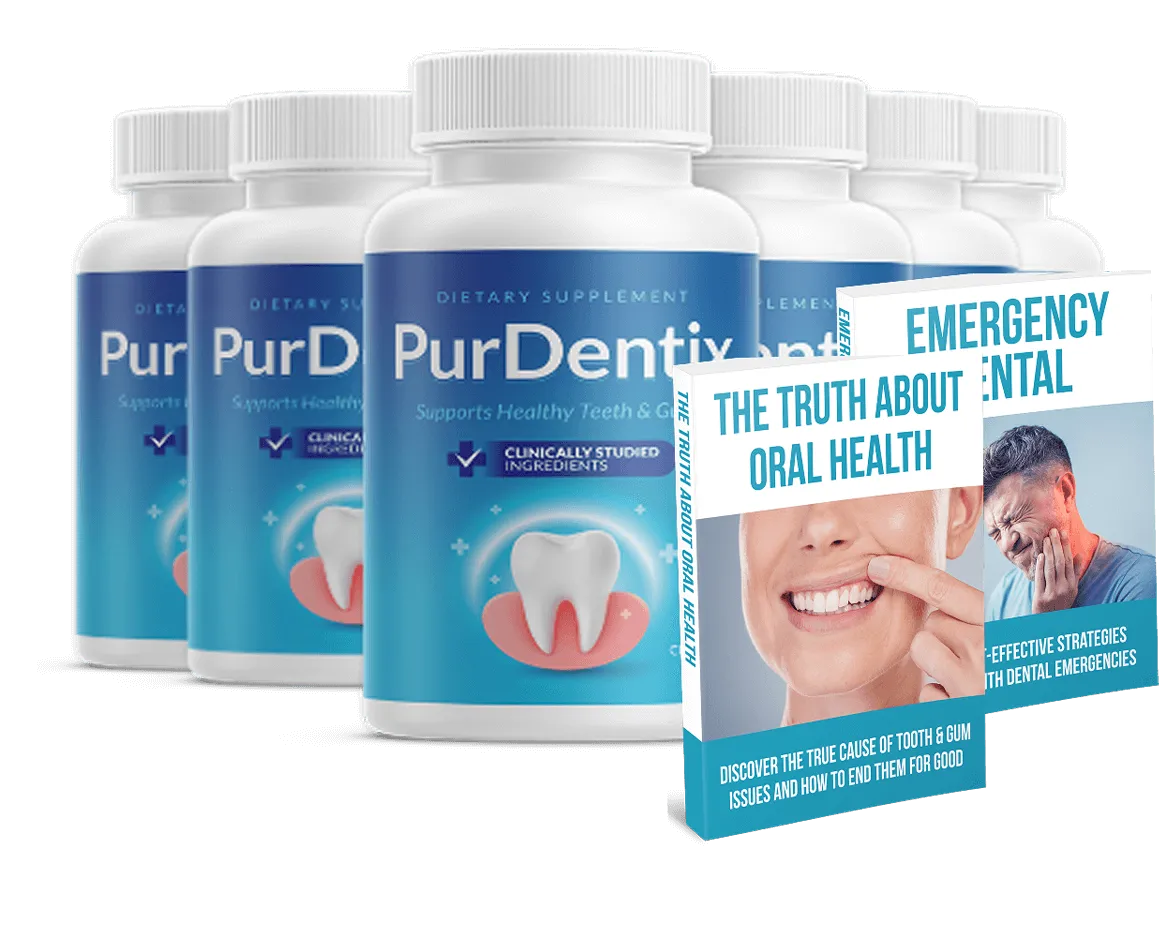
PurDentix official 6-bottle bundle — all 8 natural ingredients, free shipping
Was $99/bottle $49/bottle 50% OFF
🛒 Get PurDentix — Official Site
🔒 Secure Checkout  |  One-Time Payment  |  60-Day Money-Back Guarantee  |  Free Shipping on 3 & 6 Bottles